How to Choose a Travel Stroller for Family Trips
A practical guide to choosing a travel stroller. Learn what to look for based on fold, weight, wheels, and your child's age for easier family travel.
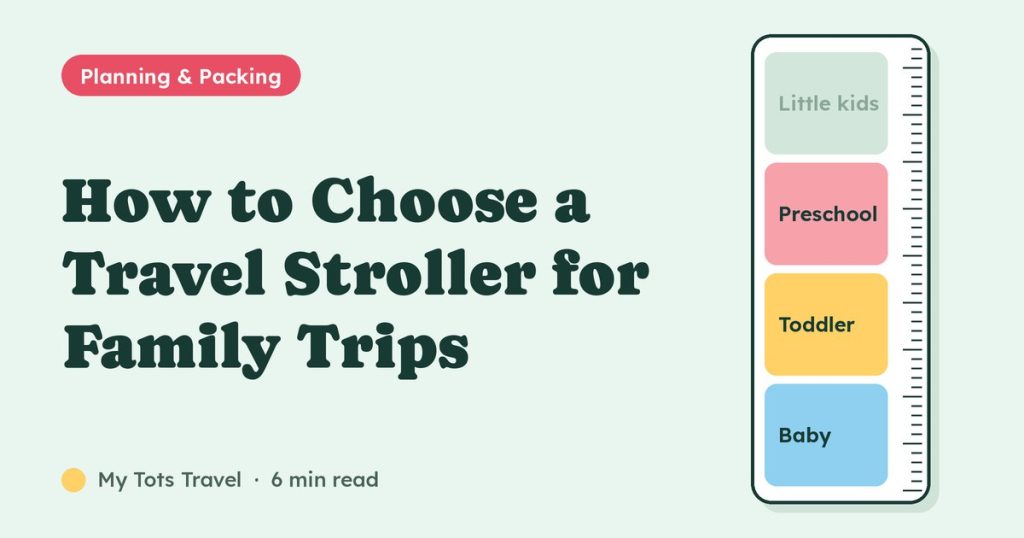
Best for
- Babyunder 1
- Toddler1 to 3
- Preschool3 to 5
- Little kids5 to 8 (not the focus)
Your everyday stroller is likely a trusted companion, perfect for neighborhood walks and trips to the store. When you travel, however, the requirements change. Suddenly you are moving through crowded airport terminals, narrow train aisles, and rental car trunks with limited space. Juggling a child, luggage, and a bulky stroller can add a layer of stress to any trip.
This is where a dedicated travel stroller can be a great help. These strollers are designed with portability in mind, but they are not all created equal. The best choice for your family depends on your child’s age, your destination, and how you plan to get there. This guide walks through the key criteria to help you find a stroller that fits your travel style.
The fold: one-handed, compact, and cabin ready
How a stroller collapses is perhaps the most important feature for travel. When you are holding a baby or toddler, you will often only have one hand free. Look for a stroller with a genuine one-hand fold mechanism. It is a good idea to test this feature to make sure it is as simple and quick as it seems.
The folded size is just as critical. A compact stroller is easier to store in airplane overhead bins, small car trunks, and hotel closets. Many strollers are marketed as being cabin-approved or carry-on sized. However, airline policies vary significantly and can change without notice. Always check the current size and weight restrictions for carry-on and gate-checked items directly with your airline before you fly. A stroller that fits one airline’s rules may not fit another’s.
Also consider how the stroller stands or lies when folded. A self-standing fold can be very convenient, keeping the stroller upright and the fabric off dirty airport floors while you wait to board. Some models come with a travel bag, which helps protect the stroller and keep it contained.
Weight, wheels, and getting around your destination
A travel stroller should be lightweight enough to carry up a flight of stairs or lift into an overhead bin without a struggle. While lighter is often better, be careful not to sacrifice sturdiness. An ultra-light stroller might feel flimsy or be more prone to tipping, especially if you hang a bag on the handlebar.
Wheels and suspension
The type of wheels and suspension will determine how smoothly the stroller handles on different surfaces. Small, plastic wheels are common on lightweight models and are fine for smooth airport floors and shopping malls. If your travels will take you over cobblestones, gravel paths, or uneven sidewalks, look for a stroller with larger wheels or some form of suspension. Better wheels provide a more comfortable ride for your child and make the stroller easier for you to push.
Maneuverability and brakes
Good maneuverability is key for weaving through crowds. Check that the front wheels swivel easily and the stroller turns without a lot of effort. The braking system should also be simple and secure. Look for a foot brake that is easy to engage and release, even when wearing sandals. A single brake pedal that locks both rear wheels is often more convenient than two separate ones.
Comfort and safety features for your child
While you focus on portability, your child’s comfort and safety are the priority. The features you need will often depend on your child’s age and stage of development.
Seat recline for naps on the go
For babies and toddlers who still nap during the day, a good seat recline is essential. A near-flat or fully flat recline is safest and most comfortable for sleeping babies. This allows them to lie in a proper position for breathing and development. Planning a trip around a toddler’s naps is much easier with the right gear. Always remember that strollers are not intended for long or unsupervised sleep. For toddlers and preschoolers, a partial recline is often enough to make napping comfortable.
Sun canopy and ventilation
A large, extendable sun canopy provides crucial protection from the sun and can also create a darker, cozier environment for naps. Look for canopies with a high UPF rating for better sun protection. In warm climates, ventilation is also important. Mesh panels or windows in the canopy or on the sides of the seat allow for airflow, keeping your child cool and comfortable. Some canopies also have a peekaboo window, which lets you check on your child without disturbing them.
Harness and safety
A five-point harness is a standard safety feature that secures your child at the shoulders, hips, and between the legs. Ensure the straps are easy to adjust and the buckle is secure but simple for you to operate. For younger babies who cannot sit up unassisted, you must use a stroller that offers a fully flat recline or is compatible with a bassinet or infant car seat attachment. Check the stroller’s manual for specific age and weight guidelines.
Practical features for parents
A few extra features can make a big difference in how easy the stroller is to use on a daily basis during your trip.
Storage basket
A travel stroller’s storage basket will almost always be smaller than that of a full-sized model. Still, it should be large enough to hold the essentials, like a small diaper bag, water bottles, and a few jackets. You’ll want to pack a travel day bag with these items. Check the accessibility of the basket. A basket that is easy to reach even when the seat is fully reclined is much more practical.
Handlebar and parent organizers
The handlebar height should be comfortable for the primary caregiver or caregivers who will be pushing the stroller. Some travel strollers offer adjustable handlebars, but many have a fixed height to save on weight and complexity. Also consider parent-facing storage. While many lightweight strollers skip features like cup holders or pockets to reduce bulk, these can be very useful for holding your phone, keys, and a drink.
A checklist for choosing your stroller
When you are comparing models, this list can help you focus on what matters most for travel:
- The Fold: Can I fold and unfold it easily with one hand? Does it stand on its own when folded?
- Size and Weight: Is it light enough for me to carry? Does its folded size meet my airline’s rules?
- Wheels: Are the wheels suitable for the surfaces at my destination (smooth floors, cobblestones, park paths)?
- Child Comfort: Does the seat recline enough for my child to nap comfortably and safely?
- Canopy: Is the sun canopy large enough to provide good shade and ventilation?
- Storage: Is the basket big enough for my essentials and easy to access?
- Safety: Does it have a secure five-point harness and a stable frame?
When to call your pediatrician
Most travel health questions are best addressed before you leave. If your child gets sick or injured on your trip, knowing when and where to seek medical help is important. It is a good idea to research clinics or hospitals at your destination and know the local emergency number before you travel.
Get help right away
Go to the nearest emergency department or call local emergency services for any serious medical concerns. Seek immediate care if your child experiences any of the following after a fall from a stroller or at any other time:
- Any head injury, especially with loss of consciousness, confusion, vomiting, or unusual drowsiness.
- Trouble breathing or shortness of breath.
- A seizure.
- Signs of significant dehydration, such as no tears when crying, a dry mouth, or very few wet diapers.
- A fever in a baby under three months old.
- Being unusually drowsy or very difficult to wake up.
Talk to your pediatrician before you travel
Schedule a visit with your pediatrician before your trip to discuss your travel plans and any health-related questions. This is a good time to ask about:
- Any recommended vaccines for your destination.
- Managing your child’s existing medical conditions while away from home.
- What over-the-counter medications are appropriate to pack for your child, and how to use them safely. Ask your pediatrician or pharmacist for advice on any medicines.
- Tips for managing common travel issues like jet lag or motion sickness.
General travel information, not medical advice. Rules for car seats, flights and documents vary by country and airline, so check current official guidance. Kids' health note.